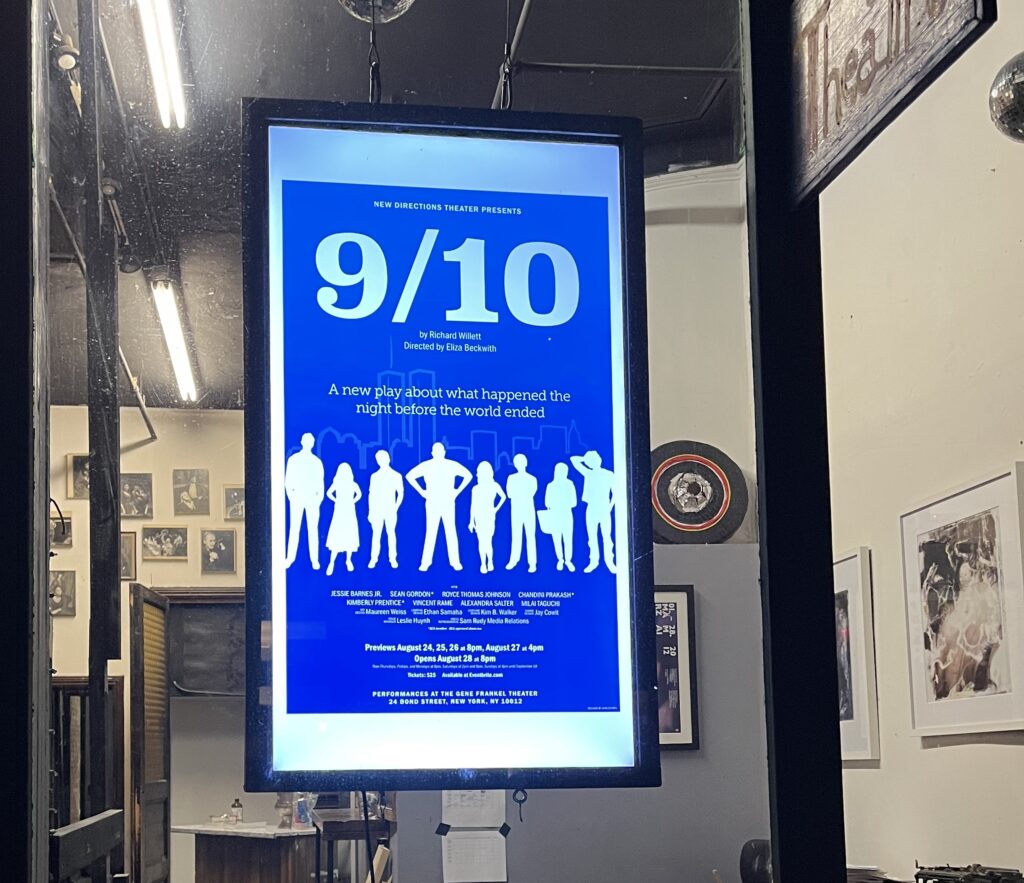
I’ve had the interesting and fortunate experience recently of seeing two works – my play 9/10, which I wrote twenty-two years ago, and my novel A FRIEND OF DOROTHY’S, which I wrote over a period of a few years beginning almost forty years ago, finally see the light of day and, after years of (however sometimes encouraging) rejection and suggestions and notes and “Quit bothering us!” emails, meeting with these fates: 9/10 received universal acclaim in a New York production, not one review that wasn’t a rave, and won four Broadway World Awards, including the award for Best New Play, and the novel, similarly, when I self-published it, received only rave reviews, got picked up by bookstores around the world, won an award or two also, and is about to be named one of the Top 100 independently published books of the year. All of which is by way of asking two questions: Who was right here? Me or the years’ worth of naysayers? And what exactly does that mean? What it seems to mean is that it’s never appropriate to give up on your writerly dream, whatever it may be. But can that be true? Never?
We all, as writers, have that (if only now virtual) drawer we put things in when we’ve sort of, well, what’s the expression, “given up” on them. We’ve decided to ignore the encouragement and only here the endless rejection and think: “There must actually be something wrong with this script or someone would have optioned it by now.” I did this once with a historical script the subject matter of which I’d been convinced by my then agent was unmarketable, only to see the exact same story filmed by HBO and win the Emmy for Outstanding Made for Television Movie. No, no one stole my script. They just came upon the same historical incident and thought it would make a great movie. They were right. I was right. And my agent was wrong.
One is left in the end, I think, riding the waves of one’s own perhaps somewhat flawed intuition. And it can also be timing. My novel, set during the AIDS crisis in New York City in the 1980s, finally arrived in an era when not too many people were writing about this anymore and generations had been born who knew nothing about it. The tone of its reception was markedly different from when my agent and I first went out with the book back in the early nineties. Same thing with 9/10. Many people even in the cast of its recent production were small children or unborn at the time of the 9/11 attacks that hover over the piece. And older people in the audience were hungry for someone to remember what they went through.
All this has become more relevant to me because I’m currently in the position of receiving notes on the first draft of my brand-new play, RUBBLE CASTLE. I gave an early draft to four trusted readers and got, to use the polite term, “mixed reviews.” Wondering if these readers, all of whom knew me and three of whom were good friends, were too close to the subject matter, I sent it to the dreaded Black List website, where I’ve gotten some criminally bad reviews over the years, and was told this: “The understatement and richly layered characters found in plays like WHO’S AFRAID OF VIRGINIA WOOLF? and GOD OF CARNAGE are infused, in this script, into a family as complex, multifaceted, and flawed as in literary icons like THE CORRECTIONS. Through the eyes of Jordan, the script illuminates a set of parents and siblings with remarkable authenticity, presence, and voice. This script deserves credit for crafting a story infused with remarkable complexity, layering, and emotionality. The family dynamic that plays out is vividly specific, yet within it are certain deeper truths and more universal components that resonate in broader terms.” There was a lot more, but my point is this: Who is right?
Well, in the end, of course, I am! And that’s what you’re left with, and it’s one of the things that can make the writing life infuriating, frustrating, and then, every once in a while, almost stunningly rewarding. I’ll leave you with my favorite piece of advice to writers on the subject of “notes” from “readers,” this one specifically about screenwriting, but still: “Always remember: You’re the only one in the room who’s seen the movie.”